Zachery's Monster
A short story

Author’s note:
Once upon a time in America, an ambitious and naïve writer of stories had a plan. Since there occur, from time to time, these mass shootings, and since the writer had a need to say something about them, he had this idea: Might not a story be written to mark each of these tragic occasions? Of course, the writer would need to work hard and work fast. But surely the goal was worthwhile…
Yesterday, in and around the city of Lewiston, Maine, a man with an assault rifle and a history of mental health problems carried out not one but two massacres. In days to come, until this latest shooting fades from the new cycle—or is supplanted by a different shooting in a different community—opinion writers and news analysts will have much to say. They will say it with more factual authority and political savvy than I could. So I won't add a word on that score.
Of course, I am that ambitious and naïve writer of stories. As such, I can offer what fiction can and opinion/analysis cannot. By its nature, fiction is able to go inside a person—an imagined person, admittedly, but there is at least the possibility that all the self-reflection, self-deception, self-justification, and pain that churns in a mind not at peace (which, at one time or another, is every mind) can be made to seem real. And if it seems real, it might shed a reflected light on what is real.
As for my plan, I gave up after two stories. I am not a particularly fast writer. Even if I was, this is America. Can any writer keep up?
This week’s tale, ‘Zachery’s Monster,’ is one of my two attempts at making psychic sense of our national shame and recurring disaster. It will do absolutely nothing for victims or survivors in Lewiston or anywhere else. But I hope it offers a bit of insight to people for whom fiction is a way to make sense of the incomprehensible.
Zachery’s Monster
This early the world was a heightened state. Or possibly, Armstead thought with a runner’s clarity, he was. The new sneakers might have something to do with it, garish-looking things but highly rated, with some sort of high tech gel in the heal. He loped along feeling the advantage. In the second mile, the sun rose above the lake. In the fourth, the trees that had turned red appeared to burn, as if the forest that surrounded his house and family were on fire.
Armstead, who worked in Human Resources, thought about the day ahead. Today would be about hiring and not firing, which made him anticipate pleasantly. The loop was five and a half miles of narrow country road, the lake appearing and disappearing as the trees allowed; in a week he would see water continuously. Soon Jesse would rise, to make the breakfast she made every morning, not for herself but for their son Zachery. How goes the breakfast, Jesse liked to say, goes the day. The boy required a banana with no spots, one egg fried not hard but not runny, and a frozen waffle of a particular brand. Once Jesse had brought home a different brand and Zachery was in a rage for a week. The right waffles now filled a spare freezer.
In the final mile the dream came back. Not much to remember, something following him as he ran in magical shoes. In the dream, the question of the pursuer had been as urgent as the need to get away, but he never saw what was chasing him and he never got away. He escaped by waking up, and in his new sneakers, which were magical in their way, he tiptoed downstairs.
What Armstead recalled wasn’t the nature of the pursuer in his dream but the feeling. Dread or helplessness—he couldn’t tell which, now actually running. He had little direct experience in his adult life of either, even as he had daily experience, through his work, of both.
Hearing something behind him, he ran faster. The gel propelled him. The sound was familiar yet ominous, and made him feel again the horrors of the night. He looked over his shoulder and saw it, a big beast of a thing, and as usual did not recognize the driver behind the tinted glass. He knew few of his neighbors, none well. They lived secluded in large houses and travelled high up behind the darkened glass of their SUVs.
The vehicle went past with an odorless plume and a swirl of dry leaves, and Armstead began to sprint, as if he were the pursuer.
*
That winter he decided he needed something to occupy his free time. Not that he had very much: sixty hours for the office, what seemed like twenty for Zachery, an hour a day running the loop. But he had begun to feel hollow in a way he hoped a hobby could fill. He didn’t speak of it—the feeling or the hobby—to Jesse or anyone else. He tried to act like his old self, but the hollowness asserted itself as a new kind of nervous energy. At work he would finish a piece of business and grow immediately restless. He sought more, filled his plate with other’s projects, became even more appreciated and well liked.
Armstead was fit and lean, with a head of premature silver hair and a face that had always made people want to talk. In the halls he moved quickly; colleagues he walked with asked him to slow down. “Who’s chasing you, Dean?” the personnel manager Wallace asked. Wallace was calm and unhurried, as Armstead used to be. And when unaccompanied he did in fact often find himself running.
*
His commute took him past a shop that sold sporting equipment. One snowy evening he stopped in, on impulse. In the warmth of the shop he saw rods and reels, tackle, a wood stove topped with a vibrating kettle.
“Driving bad?” the man at the counter said.
“You might say that.”
“Something particular you’re interested in?” The man had a shining face, inky black hair, and thick glasses that reflected the light.
“Fishing gear.” Armstead said. “I’m looking for a new hobby.”
“Planning on ice fishing?”
Armstead smiled. He realized it was the wrong time of year and the man was being diplomatic.
“What’s this?” Armstead asked. A nickel-colored rifle with a scope and an odd piece of electronics below the barrel had caught his attention.
“It’s a Barrett M82 close combat rifle. Not exactly a beginner’s gun.”
The brushed metal changed hue subtly along the barrel. The scope was enormous. The price tag said seventy-two hundred dollars. Armstead took satisfaction in knowing he could afford it easily. “Tell me about it,” he said.
“This gun has a titanium muzzle brake, which lightens the front end. Targets quicker that way. That’s a laser sight. Just getting your feet wet?”
“I am.” Armstead surprised himself by saying this.
“I can get you started, but not with this.” The man had come to within inches of Armstead. His black framed glasses were opaque. “My new customers often say they’re going fishing. Then they come over here. Then they go over there.”
“Over where?”
The proprietor pointed to a glass case that held pistols. “That’s where you go for personal protection. It’s why you came in here, isn’t it?”
The idea had never occurred to Armstead, not consciously, but as he looked at the proprietor—or rather tried to make out the expression behind the impenetrable lenses—he wondered if perhaps the man was right.
*
Not long afterward he was putting Zachery to bed. The boy was already filling out; when in a temper he could be as strong as a man. Tonight was relatively peaceful, hopefully no more than an hour’s work. Jesse was at choir rehearsal.
“Do you want a bath or a shower?” Armstead asked.
“Twilly wants to go to school.”
“You know Twilly can’t go to school. Mrs. Lanno doesn’t let the kids bring friends in fifth grade.”
“Twilly’s not a FRIEND. Twilly’s a DOG.”
“I know Twilly’s a dog, but he’s still your friend. Bath or shower, Kiddo?”
“He’s not real! Friends have to be REAL!”
Had he gone against Jesse’s advice? He had. Never give Zach a choice, just make him think he has one Jesse liked to say. He’d given Zach a choice. But that was his business; Jesse wasn’t here. Yet in a way she was. Once he gets antagonized it’s difficult for him to control himself. It’s not his fault, it’s just the way his brain works. First calm him down. Calm him how? He had to resist the urge to raise his own voice.
“Okay, Zach. Twilly’s not real. But Mrs. Lanno doesn’t allow stuffed animals and you don’t want to disappoint Mrs. Lanno, do you?”
“I want Twilly to take a bath,” the boy said with sudden calmness. He rocked on his bed hugging the threadbare toy.
“We can ask Twilly if he wants to get wet. I don’t think Twilly likes getting wet.”
“You ask him, Da.”
“Twilly,” Armstead said into one of the ragged ears. “You don’t want to get all wet, do you?” He could smell his son; the boy’s bathroom hygiene wasn’t good. Not bathing tonight was out of the question. “Did Twilly give you an answer, Zach? You’re the only one who can hear him.”
“He said yes.”
“Meaning yes he doesn’t want to get all wet?”
“YES HE WANTS TO TAKE A BATH!”
Armstead looked at the clock. An hour was too hopeful an estimate by half. Jesse was due back at nine and it was seven-fifteen. He both resented her absence and was glad she wasn’t here to see this. What would she say? Turn it into a game. But what if nine o’clock came and there was Zachery, rocking on the bed and smelling like shit? It had been known to happen. A few years ago, even a few months, it had been easier. The boy was growing up. For the first time Armstead felt truly afraid of the prospect.
Maybe that was the problem: he was showing fear. Showing it because feeling it, but if he could hide the fear he might win the battle.
“You’re getting into the bath. Give me the toy.”
“Twilly’s not a toy.”
“Give it to me.”
This went on for a while; and then at a certain point, he could not say when, or by what trigger, Zachery screamed. Not once, but a feral howl that went on and on, interrupted only by the child’s need to breathe.
Not caring what Jesse would say or do, he shouted, “Give it to me or I’ll take him away for a week!” This quieted Zachery; he had slept with the stuffed dog since birth. He rocked more frantically. Armstead grabbed the arm that held the filthy object and pried it loose. It took most of his strength, and energized him. The boy was prostrate on the bed now, sobbing. “You stink, son. You’re getting in the tub.” It felt good to say this. Anger and truth, his new watchwords. And then, before he had time to pick the child up, Zachery slid off the bed and ran. It was seven-forty.
Armstead followed him into the hall. He wasn’t in the hall. The bathroom, then. He wasn’t in the bathroom. The father reflected. For years now, at least since their child’s condition had been diagnosed, he’d been a good sport about the whole business. To most, he was the family hero: calm, resourceful, patient, loving. And yet love for his son was something he’d never quite felt, except when Zachery was a newborn, despite appearing to love, saying he loved, convincing others he loved. He empathized, is what he did. He was the Human Resources manager.
Tonight there was a curious charge in the air, a cavalier feeling to go along with Zachery’s funk. Armstead’s anger had been momentary, contrived for effect; and yet it felt wonderful. The oddities of the child had turned into something grotesque. The quiet house held the exciting possibilities of the carefree, in spirit if not in practice. He would have to find the boy, bathe him, dress him, get him to sleep. Then he could visit the website the man at the hunting shop suggested.
“Zach!” he called. “Zach! Kiddo! There’s something I want to show you!” Exactly what he would figure out later. Turn it into a game. He was ready to do this, but it would be his game. He roamed the rooms, looking in the old hiding places. The stealth fit his mood. “There’s something outside. I want you to find it for me, Zach. You’re good at finding things.”
“What is it?” The still-small voice came from inside the wall unit that held the television. A new hiding place.
Armstead talked to the cabinet door. “I’m not sure what it is. You have to look.”
The door opened and Zachery, with the ragged animal and his toilet smell, crawled out. They went to the wall of glass in back.
“There, where the snow is deepest,” Armstead said. “Behind the biggest tree. Can you see it?”
A fragment of moon lit the woods and the ridges of ice on the lake. “What is it, Da?”
“What do you think, Kiddo?”
“A monster?”
“I think it is,” Armstead said approvingly. “Two yellow eyes. And claws that can tear you to shreds. It’s the lake monster.”
“I’m scared,” the boy whispered, and held his father’s leg with his free hand. But he looked. “Will it hurt us?”
“Not if we do the things we’re supposed to do. Now what are you supposed to do before you go to bed, Kiddo?”
“Bath.”
“Good. How do you feel now?”
“Scared.”
Armstead too felt it. The charged air he had experienced upstairs was powerfully present. The sensation was not of peace but of motion, as if there really was a monster stalking them.
*
At work Wallace asked if everything was alright.
“Why wouldn’t it be?”
“That’s why. That tone. You seem testy lately. I just thought I’d ask how things were going at home. As a friend.”
Armstead decided the personnel manager was not a friend, had never been. A few lunches didn’t qualify. Wallace was solicitous once or twice more but detected his colleague’s desire to be left alone. The tone around the place had turned dour, with more firing—layoffs, everyone said, though no one was ever recalled—than hiring. He found the work less disagreeable than in the past.
In the evenings, kept inside by an especially cold winter, Jesse offered to do more with Zachery.
“Not necessary,” he said.
“You seem short with him.”
“Efficient. He’s getting older. He needs to take more responsibility. Maybe we’ve been indulging his—his peculiarities too long.” He chose the word carefully, but still read the hurt in his wife’s face.
“What all the books say—” she began.
“I know what they say. You’ve made me read most of them. To tell you the truth they all have this indulgent tone. The psych types who write those things don’t live it like we do. This isn’t some study, it’s a twenty-four hour a day job. A little more authority is what the kid needs.”
“Please don’t raise your voice, Dean.” Jesse’s own voice was small, unchallenging. Always her protective mechanism when faced with hostility.
“Am I raising my voice?” he yelled.
“He’s sleeping right next door.”
“Someday he’ll be out there—” Armstead gestured toward the glass wall—“where he’ll have to follow the rules. If being afraid of consequences makes him do that, then he should learn how to be afraid.”
“Then I suppose it’s true.”
“What!”
“Please lower your voice. He’s a light sleeper. He’s says you’ve been scaring him, telling him about monsters who live in the lake.”
“He said that?”
“Yes. That you’ve been telling him stories. That you even took him out in the snow in his pajamas to show him, to scare him.”
“We play a game. Just like you told me.”
“That’s not what I meant and you know it.”
“It’s working. I’ve never had such an easy time with the kid.” In the pool of light on the other side of the bed Jesse had her head in her hands: wheat-colored hair with gray strands, skin bunching beneath the lowered chin. They were silent a minute, no noise at all from outside but also none on the other side of the wall. Armstead said, “See, he sleeps through anything.”
“Or he’s already awake reading. Or listening. Worrying whether his Mommy and Daddy love him.”
“He reads?” said Armstead.
“Don’t be cynical Dean. He’s been making a lot of progress and they tell me at the school it’s not unusual for delayed readers like Zach to become proficient given time.”
“And support at home.”
“Exactly—”
“Which is another thing I’m not giving him.”
“You’re changing the subject,” said his wife with irritation, the first she’d shown. “And that’s not at all what I said.”
“But you believe it.”
Her chin drooped another inch. “You know Dean, lately it’s as if you want to be hurt.”
*
He ran through the tiny clouds he made himself. He passed the house of a family he did not know and then the Robertson home—he had met the woman once at the grocery store, both of them agreeing that the four of them would get together when things were less busy but of course things were never less busy—and after that a large contemporary with glass sliders that seemed to invite you inside except the glass was frosted over. He rarely thought of all this familiar anonymity. Only recently had it begun to bother him, as so much had begun to bother him.
He ran at first away from something, the way he ran around the house: wherever he happened to be became acutely uncomfortable and he hurried to another room, another activity. Jesse had pointed out his restlessness with increasing concern. In the second mile he ran from some vague trouble he could not name. Then in the third the need for escape became a need to arrive. Armstead was doing the chasing, the way he did at work, bumping people who moved too slowly, excusing himself. Wallace no longer seemed to care but several who worked for him made light of his darting and caroming. His own boss suggested he take a vacation.
“I’ve got too much to do,” Armstead told him.
“No one’s indispensable. Isn’t that one of your mottos, Dean?”
“You think I need a rest?”
The VP looked at him with amused disbelief.
“I know my performance has been suffering a bit,” Armstead admitted.
“Let me put it this way. There used to be a joke around here: The second most valuable asset in this company after the product itself is Dean Armstead’s way of handling people. I believe Wallace called you the Dean of Empathy.”
“Wallace said that?”
“Not recently. Now people come to him with their problems. Your door used to be open. Not any more. I think people feel they’ve lost a friend. How many times did that young woman in Sales cry on your shoulder before she got her bearings? Didn’t you get her some kind of help.”
“You know that’s confidential, Tom. But yeah, something like that.”
“Then why don’t you get some yourself. Look in your contact list.”
He did not look in his contact list. Help in the conventional sense was not for him, it was for the people he helped. Over years he had been witness to troubled personalities, heard whispered confessions, admissions of this or that treatment. He listened. He had a way of safely inhabiting someone else’s predicament, and up to a point someone else’s pain. It had never occurred to him before, but this talent depended on his own normalcy. If he was troubled by something (and he knew he was) it had to be outside, down the hall or around the next bend.
Armstead looked for what he needed in the fourth mile, and when it failed to materialize in the fifth. He puffed along the frozen lake, the frosted windows of his own house just coming into view.
*
One night in April the lake kept them awake with a series of cracks that sounded like a rifle range. Zachery came screaming into their room and had to be comforted in their bed. Every so often a report shook the room and sent the boy diving beneath the covers.
“It’s the monster,” he cried.
Jesse glared.
Into the covers Armstead said, “It’s just the ice breaking up, Kiddo.”
Despite all the pediatric drugs the news from school was not encouraging. There were new rules and checklists. Jesse networked and researched. Armstead’s time alone with his son was artfully curtailed by his wife but there remained some. Jesse went to her support group regularly—not so much for the support, he suspected, as for the break. One night she came home upset; the teenage daughter of a member of her group had become psychotic. The girl had a new diagnosis, new and more powerful drugs, the likelihood of institutionalization. Sometimes kids on the spectrum, Jesse explained through tears, develop schizophrenia.
Armstead knew he should worry about their child’s future, appreciate the relatively sane days they had. He didn’t. This was unsurprising: where the famous empathy used to be was a hole like a deep well, and he felt it filling up. He ran an additional mile, which seemed to slow the influx. Then he ran an additional three. Spring had always renewed him, but not this time. He smelled the earth and watched the animals get busy, and the most striking thing was his own indifference.
One force in all that nature he was powerfully aware of. He called it Zachery’s monster. For surely they were the same thing, what his son and he experienced. He saw one face, when he glimpsed it at all, and the child saw another. It was what they shared. He tried to outrun it, but it was always around the corner, behind a tree, over the next rise. Some never see it; the better for them. The ones who see it—and Armstead knew now he was one—must live a life of avoidance and distraction. In fables and fairy tales the very young see the truth, while the elders are blind to it. Armstead knew it was the other way around. The fortunate young are protected from the terrible sight, even from the knowledge of it. The parents who know say nothing. Both are adaptations—the not knowing, and the knowing silence—for surely if the young saw the hideous face of the thing, or were initiated into seeing it, how would they be able to grow, learn, build, reproduce? But sometimes, by a failure of health or circumstance—or the unusual constitution of a personality—the innocence falls away and the boy sees what the father does.
“Tell the monster to go away!” Zachery screamed.
Armstead promised, “I’ll talk to it.”
“How do you know where he is?”
“He finds us, Kiddo, remember?”
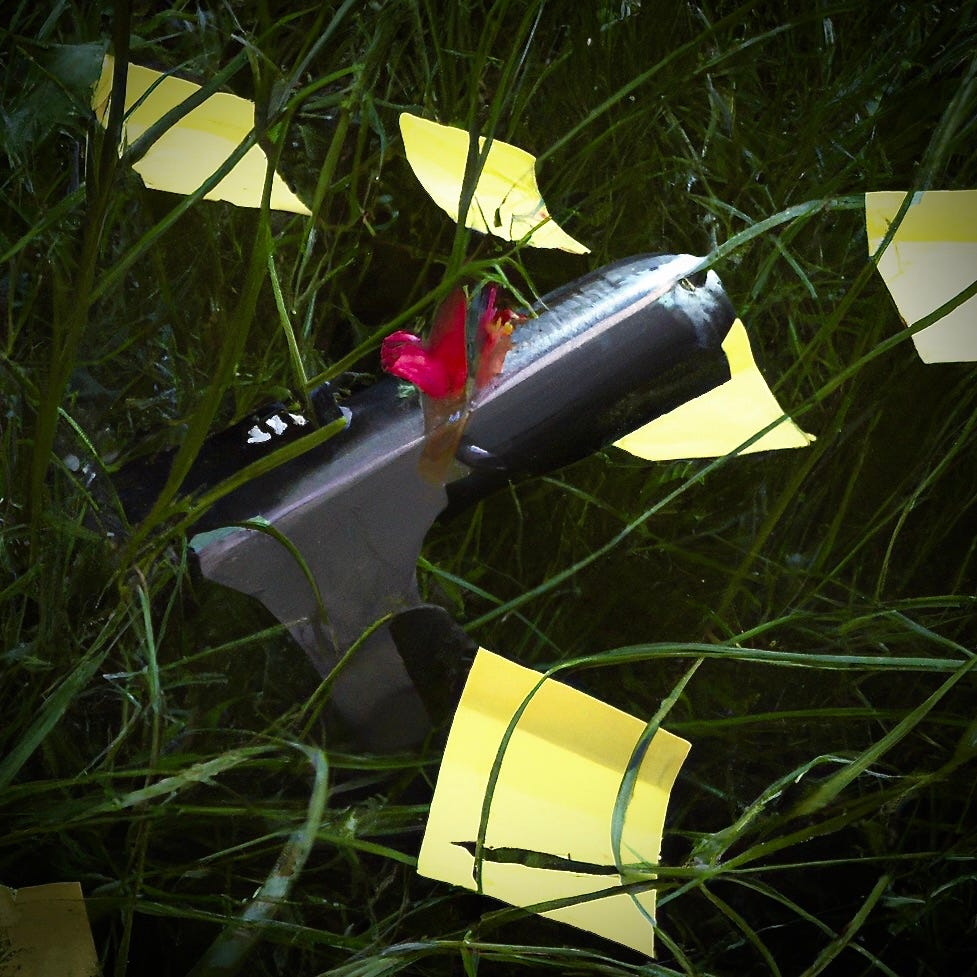
He was good to his word. Before his run Armstead wrote on a Post-it What are you? He stuck it to birch tree. He was surprised to see it there the next time he ran the loop. Armstead realized the question would never be fully answered, but there was satisfaction in the asking. He wrote Why do you have no eyes or other senses but can find us no matter where we are? This message he pierced with the branch of a juniper, where it dangled like a new leaf. On an especially painful morning he wrote Why do you have no fangs or claws but can still hurt us? Seeing it where he left it, on a stone wall, with a pinecone for a paperweight, brought him not relief but desolation as he ran past, because he knew the question to be futile.
When Zachery asked if he’d talked to the monster he said he had, but the monster didn’t answer.
*
On a Saturday in May he packed a duffle bag and walked with his son to a part of the lake far from the road or any dwelling. The boy’s strange mind seemed to focus as Armstead unzipped the bag and removed what he had bought at the hunting shop: a Glock nine millimeter automatic. Armstead had been practicing after work in an isolated field, now that the days were longer. The iron heft, the way the pistol jumped, the heat and the cordite smell were new and vital diversions. Here he could not fire but he could teach his son to clean the weapon, to load an empty clip, to aim with the safety on.
“Don’t forget,” he said solemnly, “this has to be our secret if we’re going to scare the monster away.”
Zachery held the heavy pistol with both hands and looked at it oddly.
“You can’t tell Mommy, Kiddo.”
Zachery said nothing.
“Do you understand, Zach?”
Armstead knew his son heard and understood many things even when he didn’t seem to. But this time Zachery did one of his unpredictable things and threw the gun in the direction of the water. It fell short.
“You don’t need the bad gun!” Zachery cried.
His father held him tight, because he had to make sure the kid wouldn’t run for the expensive weapon and dispose of it permanently, and because somewhere inside he did love him—and because it felt good to squeeze a little of his life away.
*
When the next list of layoffs was circulated it was Wallace who broke the news behind the closed door, out of which came the occasional shout or sob. Armstead was not terribly surprised to find himself on the list, and when his turn came behind the door Wallace said:
“You know better than anyone that this is just bottom line stuff. Bad planning high up that’s unfortunately hitting middle management. An old story, you’ve told it yourself. Don’t take it personally, Dean.” Wallace’s tone—the language behind the language, the sympathetic set of the mouth and the slightly moist eyes—was the very delivery Armstead had affected so many times. Understandable because Wallace was said to be assuming the HR duties. The interesting thing was how real and almost comforting it seemed, although comfort for Armstead was a relative term these days.
The severance package was generous enough to get them through a year: a recognition of past service, since what he had done recently for the company was exactly nothing. The layoff decision by his boss and his boss’s boss would have been an easy one. He told Wallace this.
Wallace said, “No Dean, it was a corporate level decision. It’s true you’ve been a little off your game, we all can see that. But we’re all rooting for you. In fact I wanted to ask”—he dropped his voice even lower—“if you’ve gotten any help for your…your condition.”
“What condition is that, Joe?” Armstead asked.
Wallace looked at him sympathetically.
*
Jesse was sympathetic too, also practical and philosophical. She touched him affectionately in ways she had not in months. Her solid steady performance had the odd effect of making him feel more damaged; in the smaller crises of the past he had been the solid center that his wife held onto, and the reversal only further fouled the well inside him. She too asked him about his state of mind, with the directness of someone who spends her days ministering to a chronic condition.
“I’m not depressed, hon. If anything I’m better than ever, now that I’m out of there. Ten years is too long to do one thing. I’m looking forward to a change. I’ve already sent out the resume and made a few calls.”
Which mollified her for the moment, but not at all him. He had sent out no resumes and made no calls. He knew an essential part of him was slipping away, and because it was essential he could not allow any outside interference. He must hold onto it, or lose it, on his own.
The trick was to keep busy. In the very early morning, before dawn, when for some reason he reliably awoke, he wrote notes for later distribution. He thought of the questions during the long nights. How do you choose whom to hurt? he wrote; then Why is it that you have no mercy yet leave some of us alone? He speared the papers with branches just coming into bud. He had on his running clothes but seldom ran as he used to, instead walking around the shore noticing signs of renewal everywhere but in himself. He had time to read on topics like caliber and lethality. He cleaned the weapon fanatically, to be sure it would work when needed. When assembled, he looked at it with gratitude, not as an enthusiast might but from the end, into the barrel, bluish at the outer rim and blackening quickly, drawing in the eye and perhaps the soul.
Several ideas needed to be worked out. One was the universality of human suffering, and while he did not expect to answer this ancient question in a general way he looked for a local answer, having to do with suffering in this place, his own and his son’s. For they were both victims of the monster. He wrote Do you cause us pain because you are in pain yourself? He hoped to understand suffering through compassion—the compassion that had once been their meal ticket, but had fallen into the well along with love and joy and sociability and the appreciation of springtime. He took a little solace putting the missive up somewhere along the road, but by afternoon he was again looking into the black barrel.
*
In the end there was no moment of decision, only a conviction that became something irresistible. It grew deep in the poisoned well that was all Armstead was now. He had one more note to write and he made it brief. I did it for him as well as for me. Try and understand. This Post-it he took not to the woods but to the kitchen, sticking it carefully on the granite.
He walked with one hand in Zachery’s and the other around the handle of the duffle bag. They headed for their usual spot, the son not needing to be led but pulling the father along. Zachery had come to enjoy these outings; he had kept the secret. Occasionally he reached down to pick something up.
Armstead now knew he loved his son without reservation. Which was why he could not let him enter cruel adulthood, where an older Zachery, a skilless Zachery, even a crazy Zachery would be at the mercy of people who were not paid to care. And loving him, and being at last in a position to understand what it is like to be daily in thrall of monster, he was the only person to make and carry out such a judgment.
The boy was foraging in the carpet of old leaves. They were still in sight of a house or two, families he had never met and never would. The water was just beyond the clearing.
The boy said, “Da! I found something.”
He put down the duffle bag. “Not now, Kiddo.”
“Look at it. LOOK!”
He took out the Glock, the clip loaded with two hollow points.
His son came to him, waving a faded yellow leaf. Only it wasn’t a leaf. It was too regular and uniform, and still the unnatural yellow of the Post-it he had left behind at home. The writing was visible despite snow and rain, and Zachery was attempting to read it. Armstead held the heavy gun. It would be necessary to work fast, not because the target presented any special problems but because the interval during which he would be in this world and Zachery would not would be the most excruciating moments of his life.
Zachery read, “‘Why do you have no eyes or other sen—sen—senses but can find us no ma—ma—matter where we are?’”
“That’s good, son.” Armstead was cheerleading, trying to keep him engaged as he pointed the weapon. “I didn’t know you could read so well.”
He heard in the child’s voice a little confidence, a new tone, and heard it again as Zachery said—read—“‘I find you to teach you but the knowl—knowl—”
“Knowledge,” said Armstead, not close enough to look at the paper but guessing from context. Looking was difficult in any event because something was clouding his vision.
“—knowledge is painful.’ There’s more. Look. LOOK!”
He looked, coming close, through bleary eyes seeing not one but two notes, and then Zachery producing a third, all with Armstead’s own handwriting on them and below that a different handwriting.
Zachery read, “‘Who are you?’” in his new confident voice. And then the answer, “‘I am older than all life and part of every life.’ This is your writing, Da.”
“Some of it is.”
“I know what you wrote, I do! Questions for the monster.”
“That’s right, Kiddo.” He had lowered the gun. He tried to see through the new growth to the nearest house, wondering if his anonymous correspondent lived there. He thought he glimpsed a figure in a window. “And the questions came back with answers.”
“The monster seems nice, Da.”
“Not so bad.”
Armstead felt unable to stand but able to kneel and did so. He could see little beyond the blurred outline of his son’s face and realized that he had not cried once through the whole ordeal. The tears seemed to fascinate his son. And all at once it occurred to him that the solution was not out here but in his contact list. He felt for the catch that held the clip and dropped the clip and turned the Glock’s grip forward and said, “I guess we don’t need this any more. The water’s deep here, son. Go ahead.” And he felt small hands take the weight from him and a moment later heard the distant plop and said, “You’re getting to be pretty good at throwing, too, Kiddo.”
The author would like to thank the Editors at The Write Place at the Write Time for permission to reprint this work.
At least in this instance there was not an ending in death. Although we see too many gun tragedies I can imagine that there are also plenty of troubled people/families figure out a better path. Of course we would never know about those. I was waiting for the classic kid gets hold of gun situation, but as in all your stories the twist is unexpected. Thanks for shedding light on some of life's challenges.
Yeah, I've been there. Down, down, down. No bottom it seems. Never thought of doing something like that to my kid, but I can see how someone might. One of mine is on the spectrum, maybe not as far as Zachary but a total handful. So I feel the man's pain. Glad he saw his way out of it. Sometimes a good story is like a way to see your own predicament from a safe angle.